The right process starts with the part you want to make. Think about size, detail, strength, finish, and the work needed after printing.
| Method | How it builds | Typical materials | A useful starting point for | Cost perspective | Experience level |
|---|---|---|---|---|---|
| Filament · FFF/FDM | A nozzle deposits softened plastic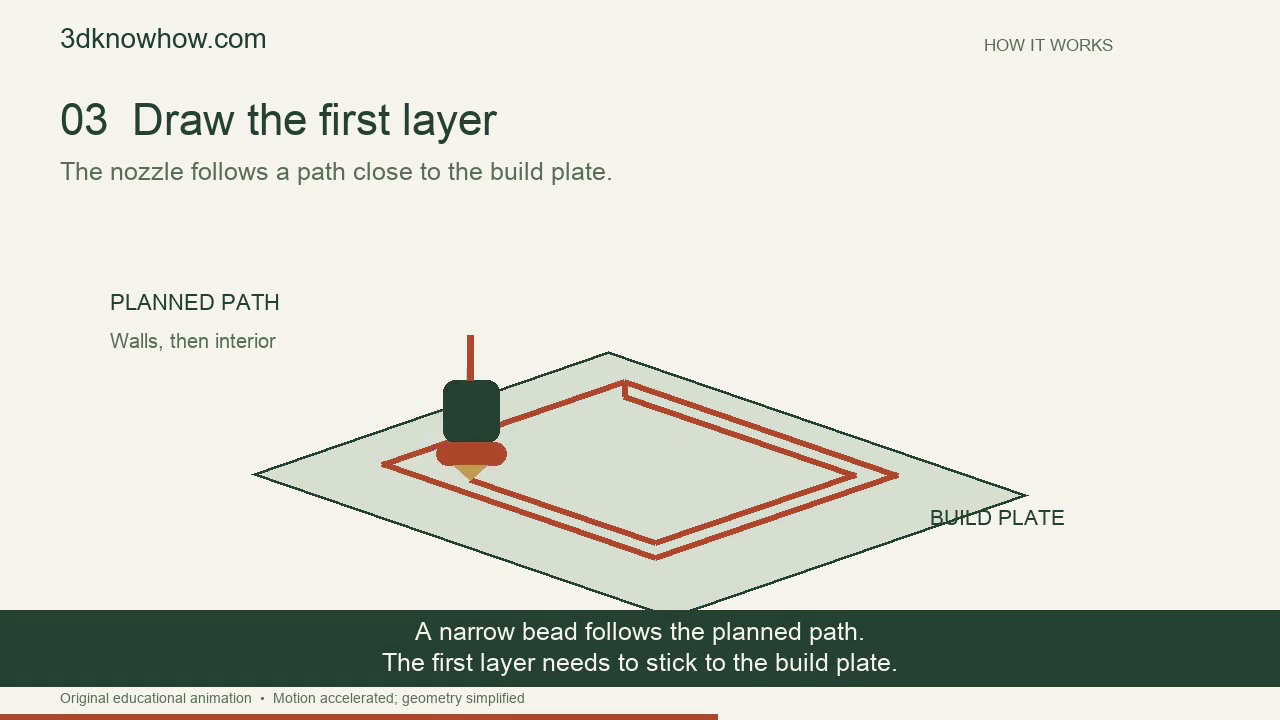 Play FDM video 1:06 |
PLA, PETG, ABS/ASA, TPU | Everyday objects and prototypes | Low entry cost; professional systems cost more | Beginner |
| Resin · SLA/DLP/MSLA | Light cures liquid resin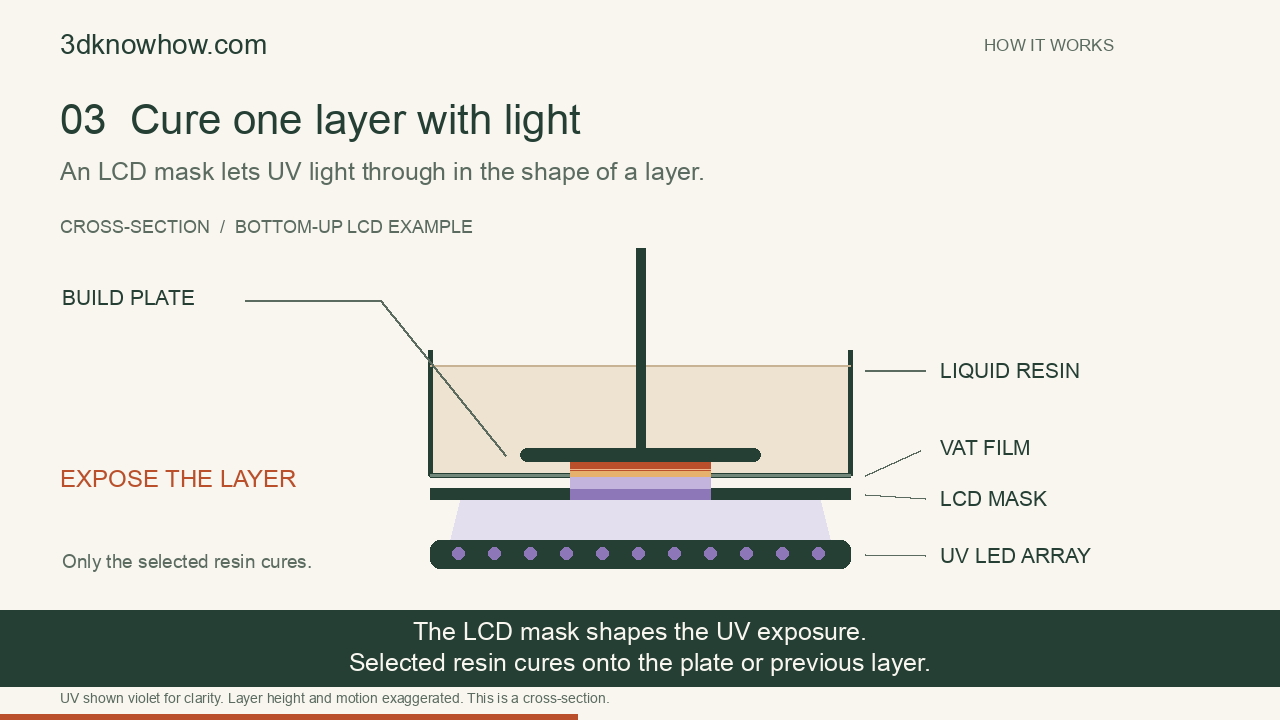 Play resin video 1:22 |
Photopolymer resins | Fine detail and small features | Low to medium entry cost; budget for washing, curing, and consumables | Intermediate |
| Polymer powder · SLS and related processes | Selected regions of powder are fused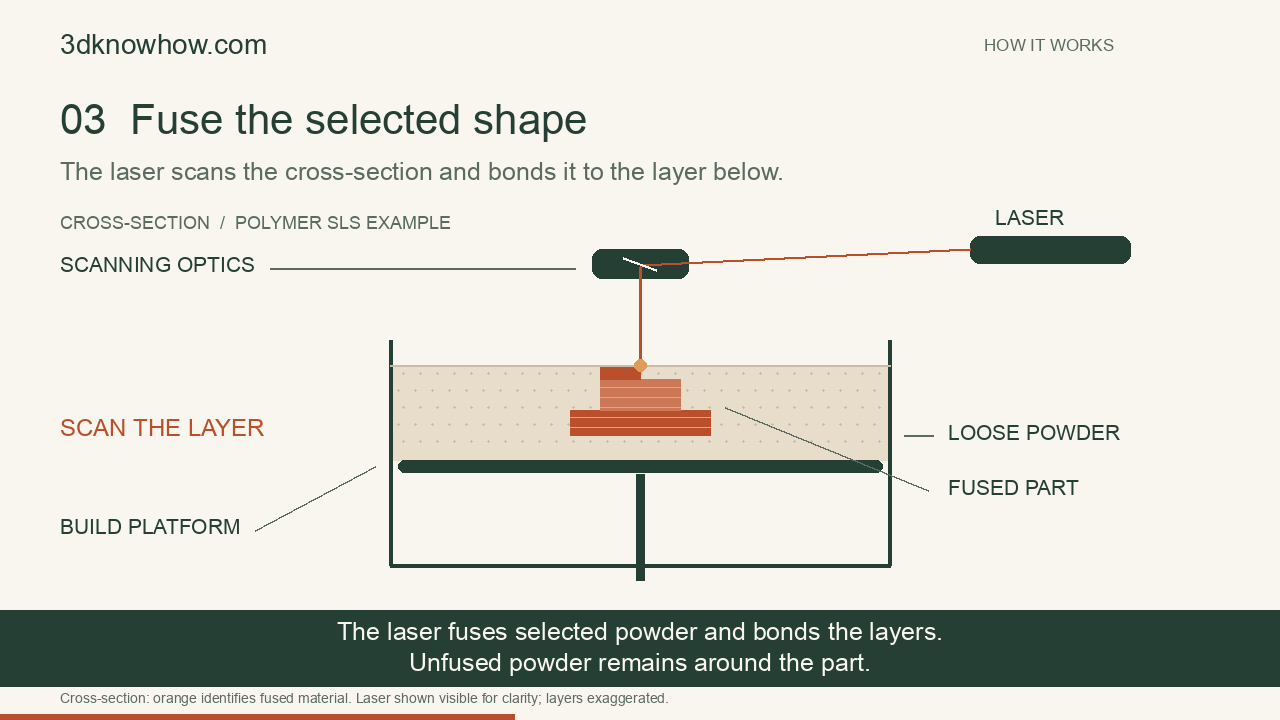 Play SLS video 1:32 |
Compatible nylon and other powders | Complex functional shapes | High equipment and setup cost; outsourcing avoids buying a system | Professional |
| Metal processes | Metal is fused, deposited, or bound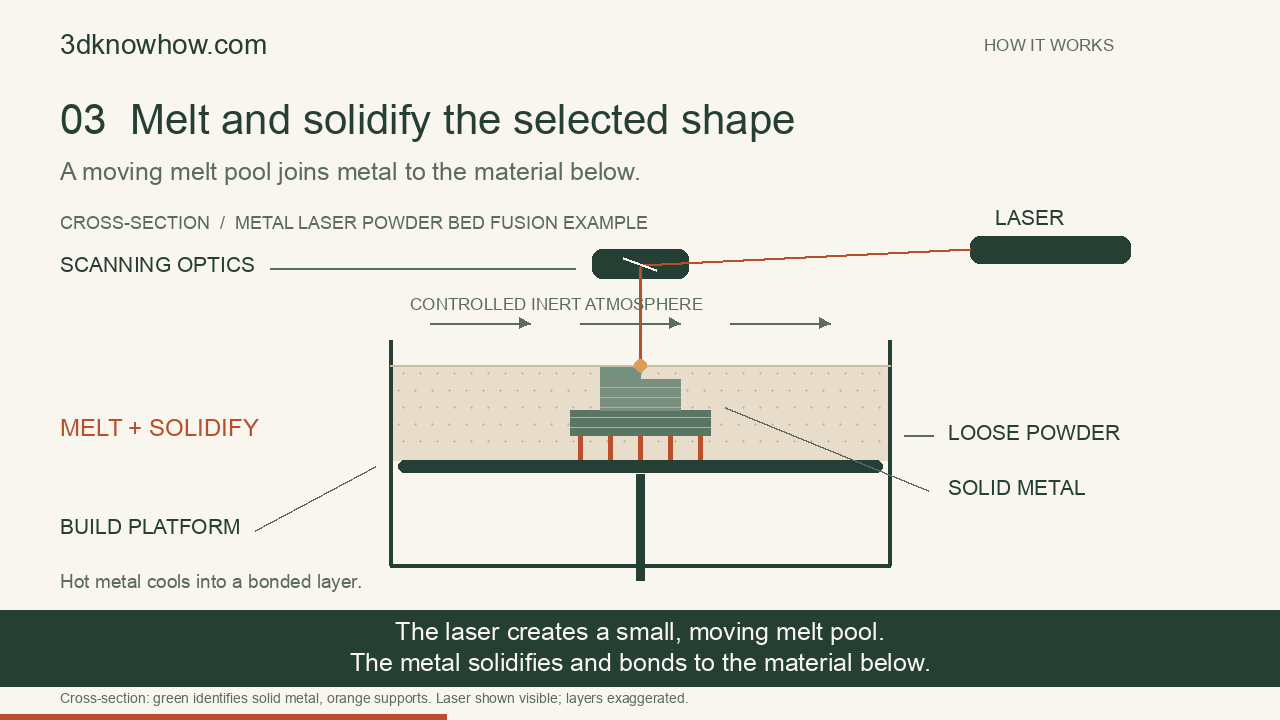 Play metal video 1:46 |
Process-specific alloys | Specialist engineering parts | Typically very high total setup cost; finishing and inspection add expense | Professional |
How to read these ratings: costs are broad comparisons for owning and operating a system, not current prices or a cost-per-part ranking. Experience levels are editorial guidance for the complete workflow, including preparation, material handling, and finishing. Beginners can learn any method through appropriate training or use a print service without operating the equipment themselves.
Select a video preview in the comparison table to watch. On iPhone and iPad, the video opens in the native player; use Back to return to this guide. These original animations are quick introductions, not complete operating guides. Motion is accelerated and geometry is simplified for clarity.
A useful distinction
These are introductory groupings. The technical process families also include material jetting, binder jetting, directed energy deposition, and sheet lamination. Metal printing is a material-based umbrella, not a single mechanism.
Make the next connection
A process and a material work together. Read the materials guide, then see real printer examples.
Further reading
Formlabs: introduction to 3D printing and EOS: additive manufacturing provide manufacturer explanations of several processes.