How it works
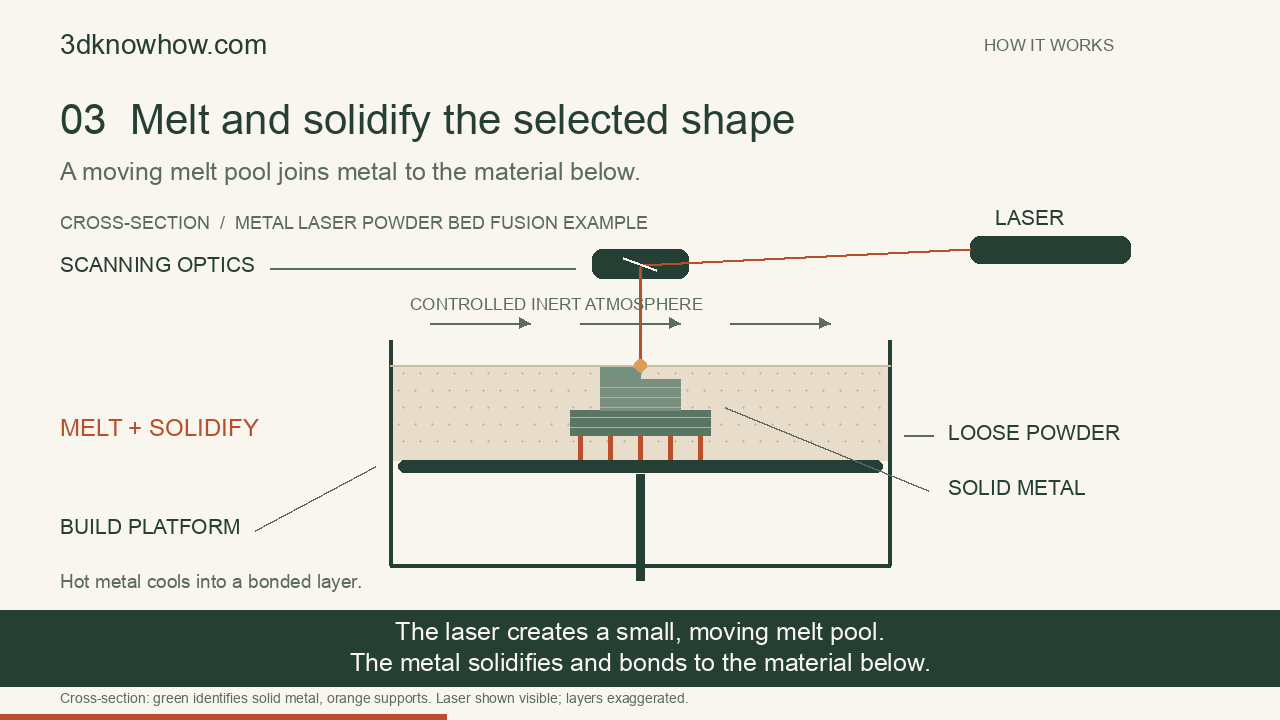
Laser powder-bed fusion selectively melts metal powder. Directed energy deposition feeds material into an energy source. Binder jetting binds a powder shape that typically needs further processing. These are different workflows.
Watch metal printing in action
This 106-second animation follows laser powder bed fusion: model preparation, supports, atmosphere control, metal melting, layer building, cooling, and finishing. It also shows how binder jetting and directed energy deposition use different workflows. Motion, geometry, and layer height are simplified for clarity.
Select the preview to watch. On iPhone and iPad, it opens in the native player; use Back to return to this guide.
Materials you can use
Compatible metal alloys are supplied as process-specific powder, wire, or bound feedstock.
Where it shines
Useful for specialized engineering, complex internal features, and selected manufacturing applications. Material qualification, finishing, and inspection can be substantial parts of production.
Plan the whole workflow
The printer is one element of an industrial process. Consider powder handling, support removal, heat treatment, machining, and part validation. Use a qualified service for an exploratory project.
A real machine to explore
EOS M 290 is an example of this printing family. It illustrates the process; this is not a hands-on review or a buying ranking.
Keep exploring
Sources & further reading
Manufacturer process documentation, metal supports and heat transfer, and NIST: directed energy deposition. Product links checked October 31, 2026.